
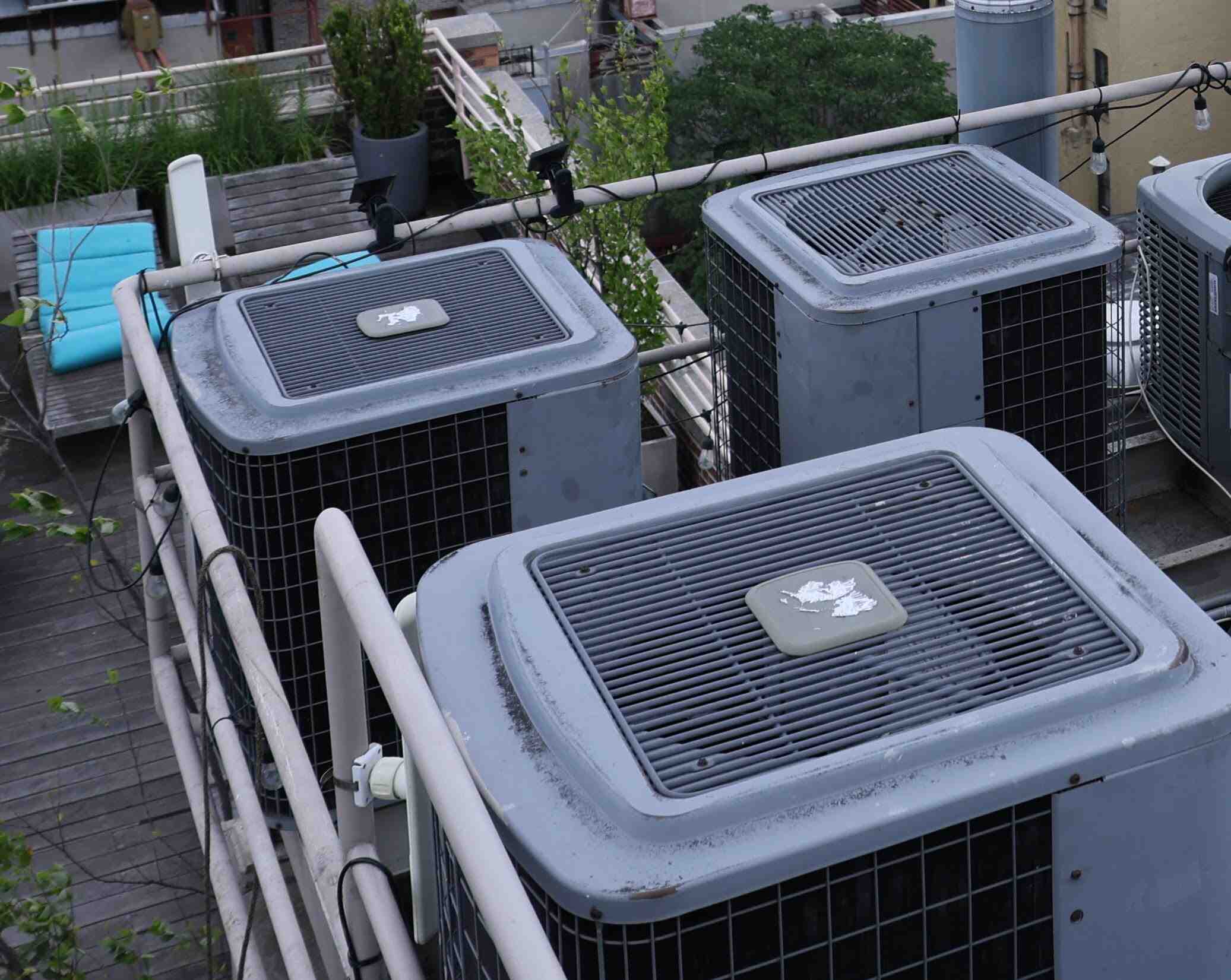
If you've ever glanced at the rooftop of a commercial building in New York and spotted those boxy metal contraptions humming away, you've already met an RTU—you just didn't know it yet. In the HVAC world, RTU stands for Rooftop Unit, and it's the workhorse that keeps everything from Manhattan office buildings to Brooklyn warehouses comfortable year-round. Think of it as the all-in-one Swiss Army knife of climate control: heating, cooling, and ventilation wrapped into a single, self-contained package that lives above your head.
An RTU (Rooftop Unit) is a packaged HVAC system designed to sit on—you guessed it—your roof. Unlike traditional split systems that scatter components between indoors and outdoors, RTUs consolidate the compressor, condenser, evaporator coil, and air handler into one weatherproof cabinet. According to HVAC professionals, these units dominate commercial spaces because they're efficient, space-saving, and easier to maintain than sprawling ductwork systems threading through your building's guts.
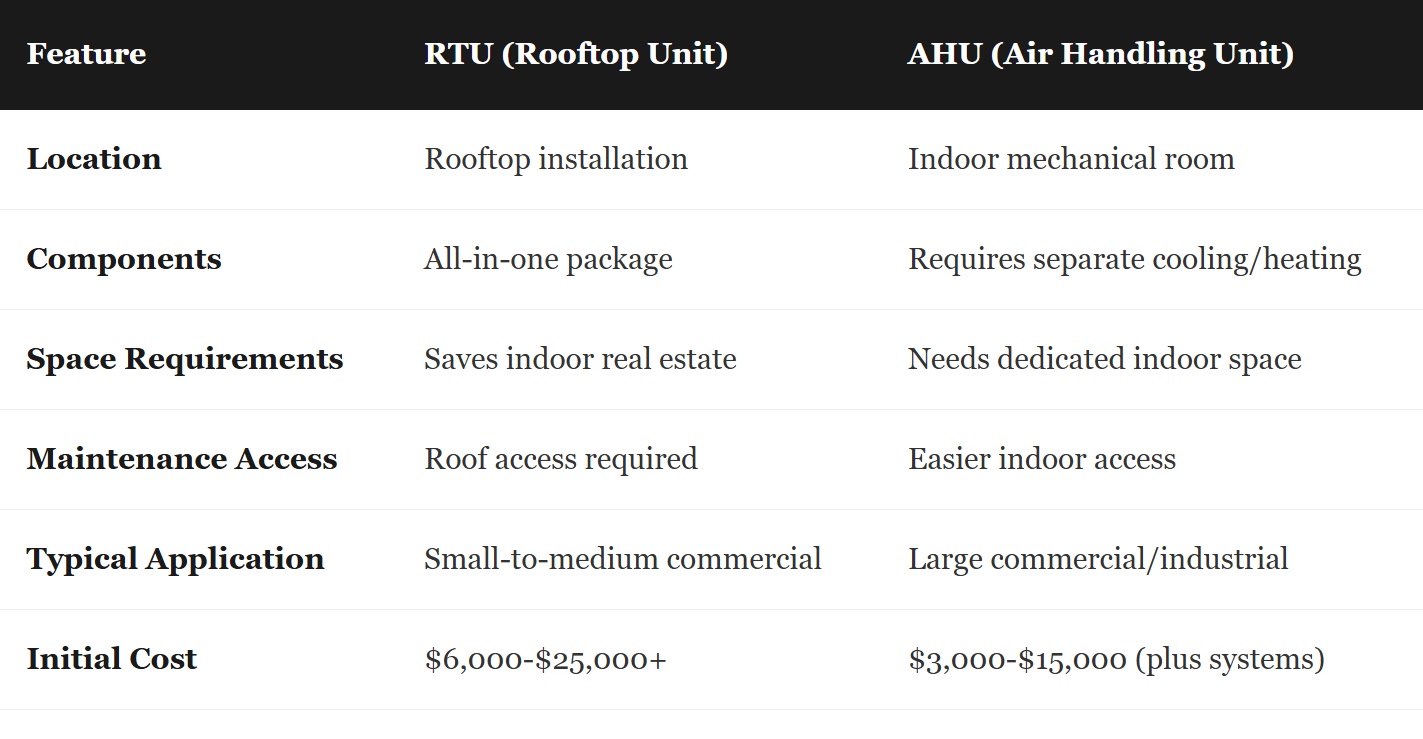
Here's where things get interesting. While RTUs are self-contained units living on rooftops, AHUs (Air Handling Units) are typically indoor systems that work with separate cooling and heating equipment. Think of RTUs as the independent freelancer who handles everything solo, while AHUs are team players requiring support from chillers, boilers, and other infrastructure.
You'll see BTU (British Thermal Unit) ratings plastered across HVAC specs like nutrition labels on organic kale. One BTU represents the energy needed to heat one pound of water by one degree Fahrenheit. In practical terms, 12,000 BTU equals one ton of cooling capacity—and no, that doesn't mean the unit weighs a ton.
For reference:
Most commercial RTUs in NY range from 3 to 25 tons, depending on building size and usage. Energy efficiency experts recommend calculating roughly 20-25 BTU per square foot for commercial spaces, though NY's extreme temperature swings might push that higher.
This isn't some secret handshake among HVAC contractors—it's a practical IRS guideline for business owners. The $5,000 rule helps determine whether HVAC work counts as a repair (tax-deductible immediately) or an improvement (depreciated over time). If your RTU repair costs less than $5,000, it's typically considered routine maintenance. Above that threshold, especially if it extends the unit's lifespan or improves efficiency significantly, Uncle Sam treats it as a capital improvement.
For NY business owners sweating over RTU replacement decisions, this distinction matters come tax season. A simple compressor swap might slide under the limit, while a full system upgrade definitely won't.
RTUs solve multiple problems simultaneously. They free up valuable interior space (critical when Manhattan rent runs $80+ per square foot), centralize maintenance away from occupied areas, and provide straightforward installation without penetrating multiple floors. For building owners, the appeal is simple: one unit, one service contract, one headache instead of several.
Commercial HVAC specialists note that modern RTUs also integrate seamlessly with building automation systems, allowing remote monitoring and control—perfect for property managers juggling multiple NY locations who'd rather not climb ladders in January.
Whether you're retrofitting a pre-war building in Queens or specifying systems for a new construction in the Bronx, understanding RTU meaning in HVAC helps you make informed decisions. Consider your building's age, rooftop structural capacity (those units are heavy), access for maintenance, and whether your heating/cooling loads justify the upfront investment.
The bottom line? RTUs represent the practical, space-efficient solution that keeps New York's commercial landscape comfortable without sacrificing precious indoor real estate. And in a city where every square foot counts, that's not just smart HVAC—it's smart business.


