
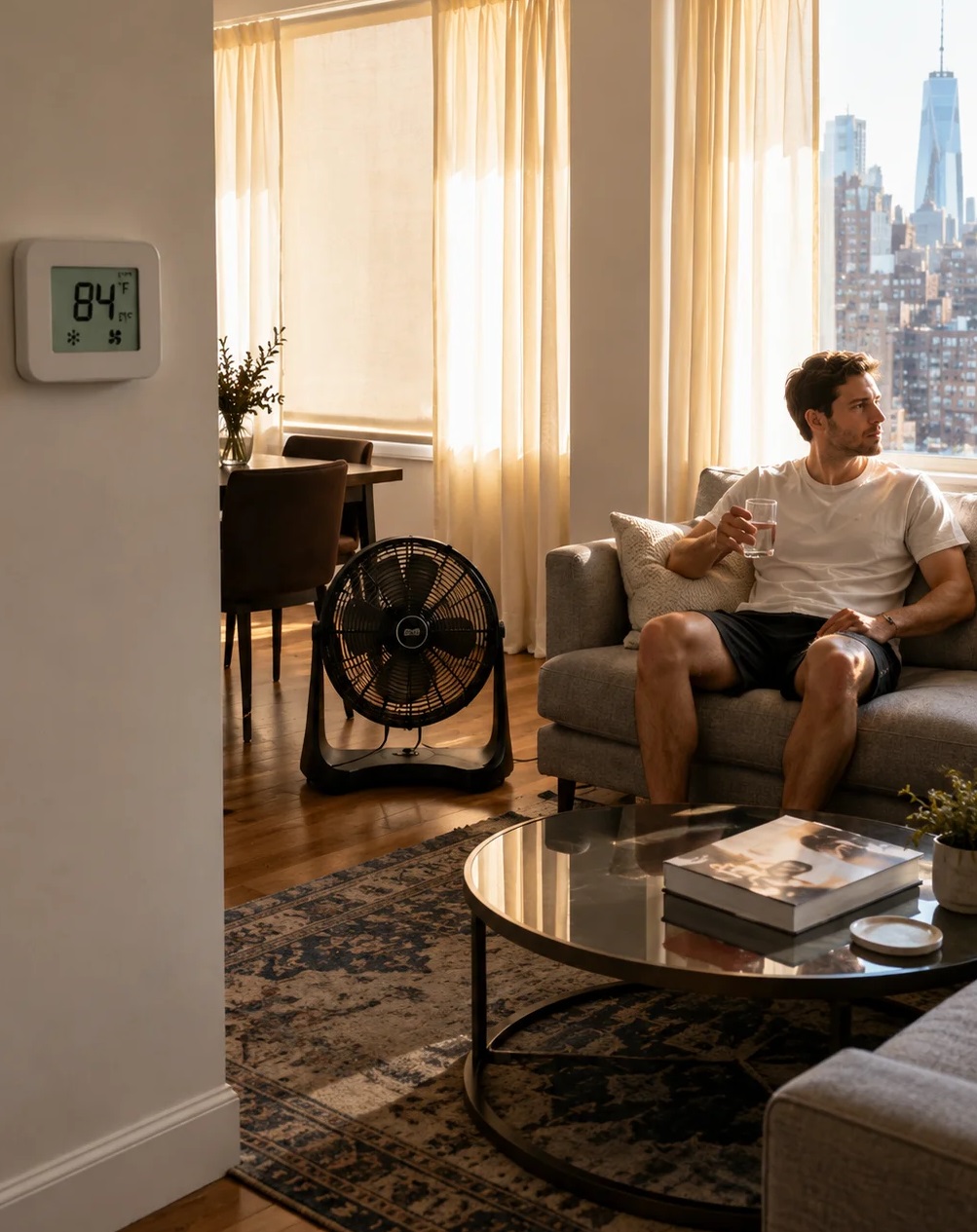
According to the U.S. Department of Energy, cooling accounts for approximately 6% of total residential energy use in the United States, with demand peaking during summer months when system failures become most common.
The consequences of prolonged exposure to elevated indoor temperatures extend beyond discomfort. The Centers for Disease Control reports that extreme heat causes more deaths annually than hurricanes, floods, and tornadoes combined. Vulnerable populations - including elderly individuals, young children, and those with chronic health conditions - face elevated risks when indoor cooling becomes unavailable.
If your AC breaks at night, you have a temporary advantage. Outdoor temperatures typically drop after sunset, creating an opportunity to flush warm indoor air and replace it with cooler exterior air. Open windows on opposite sides of your home to create cross-ventilation, positioning box fans facing outward in windows on the warmer side of the house.
During daylight hours, the approach differs significantly. If my AC is broken should I turn it off? The answer is generally yes - continuing to run a malfunctioning system can cause additional damage and increase repair costs. Once the system is off, close all windows and exterior doors immediately to preserve whatever cool air remains inside.
Close blinds, curtains, and shades on all sun-facing windows. South and west-facing windows deserve particular attention during afternoon hours when solar heat gain reaches maximum levels.
Ceiling fans should rotate counterclockwise during summer months, creating a downdraft that produces a wind-chill effect. While fans do not actually reduce air temperature, they can make occupants feel 4-6 degrees cooler through evaporative cooling on the skin. If you need to quickly cool your house if your AC breaks in summer, positioning multiple fans throughout living spaces provides immediate relief.
Place a shallow pan or bowl of ice in front of a fan to create a rudimentary cooling system. As air passes over the ice, it absorbs thermal energy and circulates cooler air into the room. This method works best in smaller spaces and requires regular ice replacement.
Appliances generate substantial heat during operation. Avoid using the oven, stovetop, dishwasher, and clothes dryer until your cooling system is restored. According to Energy Star guidelines, cooking with an oven can raise kitchen temperatures by 10 degrees or more. Opt for cold meals, outdoor grilling, or microwave preparation instead.
Incandescent light bulbs convert approximately 90% of their energy into heat rather than light. Switch to LED alternatives or simply minimize artificial lighting during daylight hours. Unplug electronics and chargers that generate heat even when idle.
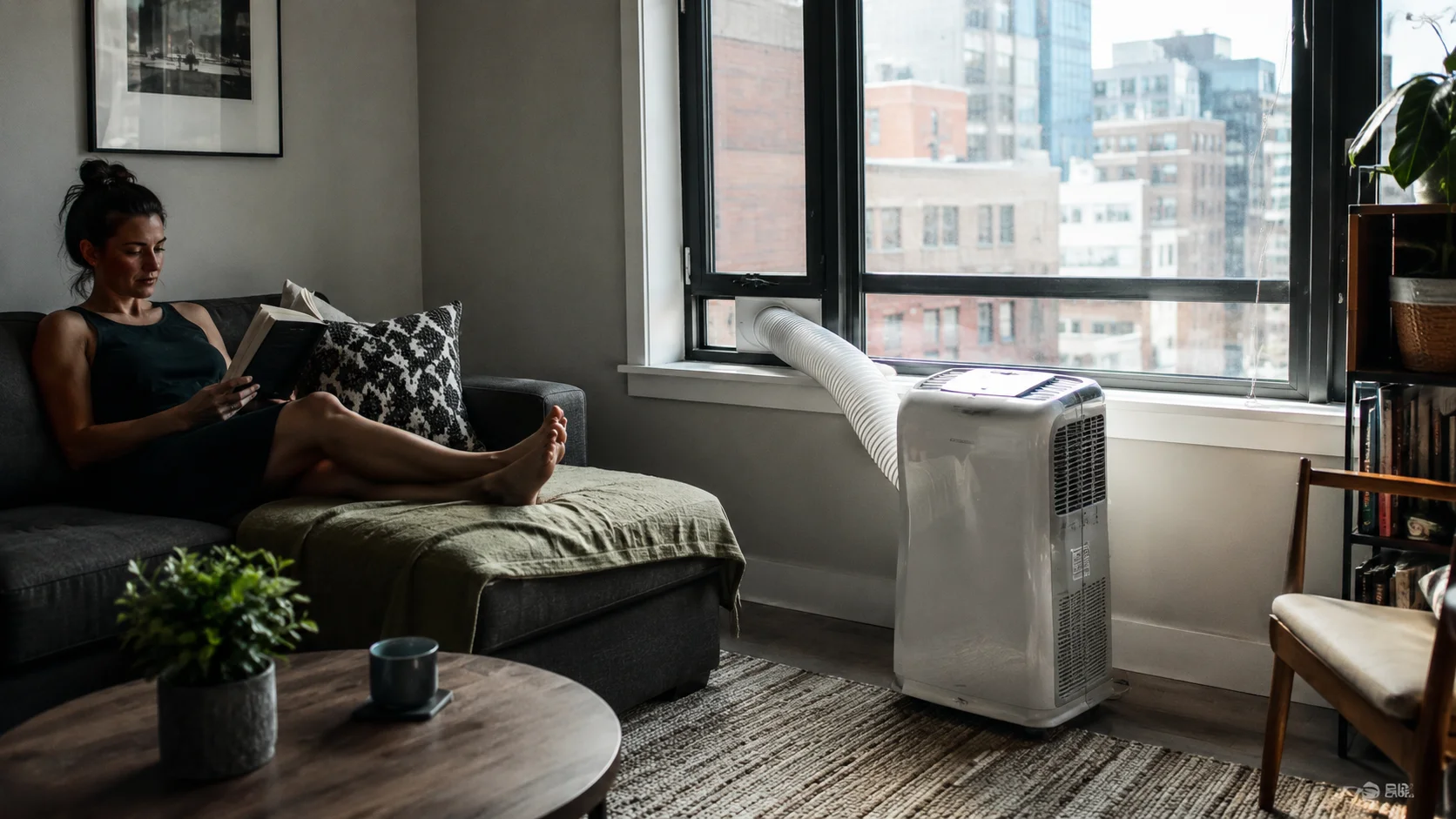
A portable AC unit provides a practical interim solution while awaiting repairs. These self-contained systems require only a window for exhaust venting and a standard electrical outlet. Units ranging from 8,000 to 14,000 BTU can effectively cool individual rooms or small apartments.
When selecting a portable unit, consider the square footage of your primary living space. Most manufacturers recommend approximately 20 BTU per square foot for adequate cooling. A 12,000 BTU unit, for example, can effectively cool spaces up to 550 square feet under normal conditions.
"What Is the 3 Minute Rule for AC?" The 3 minute rule refers to the recommended waiting period before restarting an air conditioning system after it has been turned off. This pause allows refrigerant pressures to equalize within the system, reducing strain on the compressor during startup. Repeatedly cycling an AC unit on and off without this interval can cause premature compressor failure.
"Is AC Bad for a Sore Throat?" Air conditioning itself does not cause sore throats. However, AC systems reduce humidity levels, which can dry mucous membranes and exacerbate existing throat irritation. Maintaining adequate hydration and using a humidifier in conjunction with air conditioning addresses this concern for most individuals.
"How Do Amish Cool Their Homes Without Air Conditioning?" Traditional cooling methods employed by Amish communities include strategic home orientation, deep roof overhangs for shade, cross-ventilation design, and basement living spaces during extreme heat. These passive cooling strategies informed residential architecture for centuries before mechanical cooling became widespread.
Implement preventive maintenance scheduling to reduce future failure probability. Most HVAC professionals recommend biannual system inspections—once before cooling season and once before heating season. These inspections identify potential issues before they cause complete system failures.
Contact a certified HVAC contractor to assess your current system condition and discuss repair options. If your equipment is approaching the end of its expected lifespan (typically 15-20 years for central AC systems), consider replacement quotes alongside repair estimates. In many cases, investing in a new, more efficient system provides better long-term value than repeated repairs on aging equipment.


