
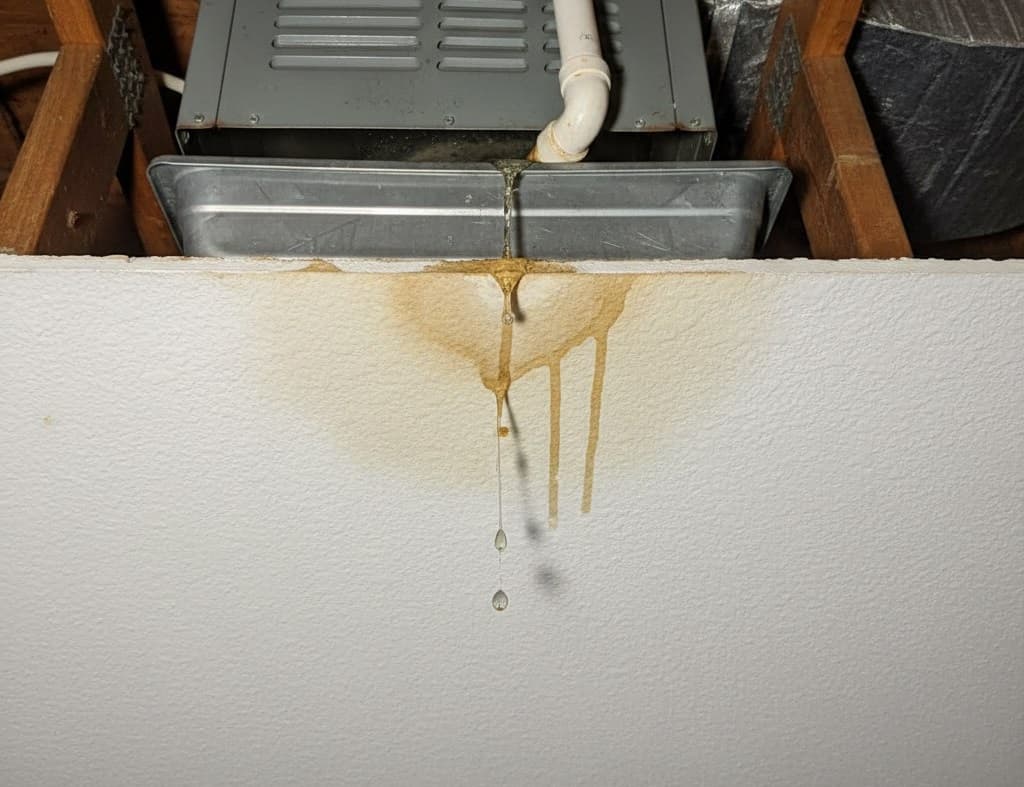
You're relaxing on a Sunday afternoon when you notice an ominous water stain spreading across your ceiling like a bad Rorschach test. Panic sets in. Is it the roof? A burst pipe? Plot twist: it's your HVAC system turning your attic into an indoor waterfall. Welcome to one of homeownership's most anxiety-inducing scenarios—HVAC filters and condensation lines leaking from the roof or attic space.
In New York's humid summers and freeze-thaw winters, this problem escalates from minor nuisance to structural nightmare faster than you can say "emergency plumber." But before you start Googling contractors at 2 AM, let's break down exactly what's happening above your head and how to fix it.
Your air conditioning system produces condensation—it's physics, not a design flaw. As warm, humid air passes over the cold evaporator coils, moisture condenses like droplets on a cold beer bottle. Normally, this water travels through a drain line to exit your home harmlessly. But when things go sideways, water starts dripping from your attic ceiling, and suddenly you're dealing with potential mold, damaged insulation, and compromised drywall.
Common culprits include:
Here's where things get legally murky. Who is responsible for leaking roofs? In New York, it depends on whether you own or rent your home.
For homeowners: You're on the hook unless manufacturer defect or installer negligence is proven. Your homeowner's insurance might cover sudden and accidental leaks (like a burst drain pan), but gradual damage from neglected maintenance? Probably not. Most policies exclude damage from lack of maintenance, which is why regular HVAC servicing isn't just recommended—it's financially prudent.
For renters: Your landlord typically handles structural issues and major systems, including HVAC repairs. Document everything with photos and written communication.
1. Turn off your HVAC system to prevent additional water damage 2. Place buckets under active drips 3. Check your air filter—if it's soaked or clogged, replace it immediately 4. Locate the condensate drain pan (usually beneath the indoor air handler) and check for overflow
Clear the condensate drain line:
Address frozen coils:
If you've cleared the drain line and replaced filters but water persists, you're dealing with something more sinister—possibly refrigerant leaks, ductwork issues, or equipment failure. Certified HVAC contractors in New York can diagnose problems with infrared cameras and pressure tests that DIY approaches can't match.
Short answer: maybe. Standart homeowners policies typically cover sudden, accidental water damage but exclude gradual damage from wear and neglect. If your condensate line suddenly cracks and floods your attic, you might have coverage. If years of ignored maintenance finally catch up? You're probably paying out of pocket.
Pro tip: Document your HVAC maintenance religiously. Annual service records from licensed technicians can demonstrate due diligence if you ever need to file a claim.
Water dripping from your AC filter or attic ceiling isn't just annoying—it's your home waving a red flag that demands attention. Whether you're tackling clogged drain lines yourself or calling in professionals for frozen coils, swift action prevents minor issues from becoming insurance nightmares.
And remember: in the battle between your HVAC system and entropy, regular maintenance is the only reliable weapon. Your ceiling will thank you.
Have HVAC leak questions or war stories? Share your experiences and solutions in the comments below. Because nothing bonds homeowners quite like shared water damage trauma.


