
.jpg)
Your heat pump just quit on you. It's February in New York, and that familiar hum suddenly stopped—or worse, the thing's running but pushing out air that feels about as warm as your refrigerator. Before you panic-call every HVAC company in the five boroughs, take a breath. Most heat pump issues aren't catastrophic, and understanding what's happening can save you from getting overcharged by someone who knows you're desperate.
Heat pumps in New York face challenges that units in milder climates simply don't. When temperatures drop below 25-30°F, these systems work exponentially harder. The 20 degree rule for heat pumps matters here—your unit shouldn't be expected to raise indoor temperature more than 20 degrees above outdoor temps without auxiliary heat kicking in. So if it's 15°F outside and you're wondering why your house won't hit 72°F, well, that's physics working against you.
The most common heat pump problems and solutions typically fall into a few categories: refrigerant issues, electrical failures, airflow restrictions, and thermostat miscommunication. I've watched my neighbor troubleshoot his Carrier system for three days before realizing his filter hadn't been changed since the Obama administration.
A heat pump won't turn on in heat mode scenario sends most people straight to their phones to call for help. But wait—check these first:
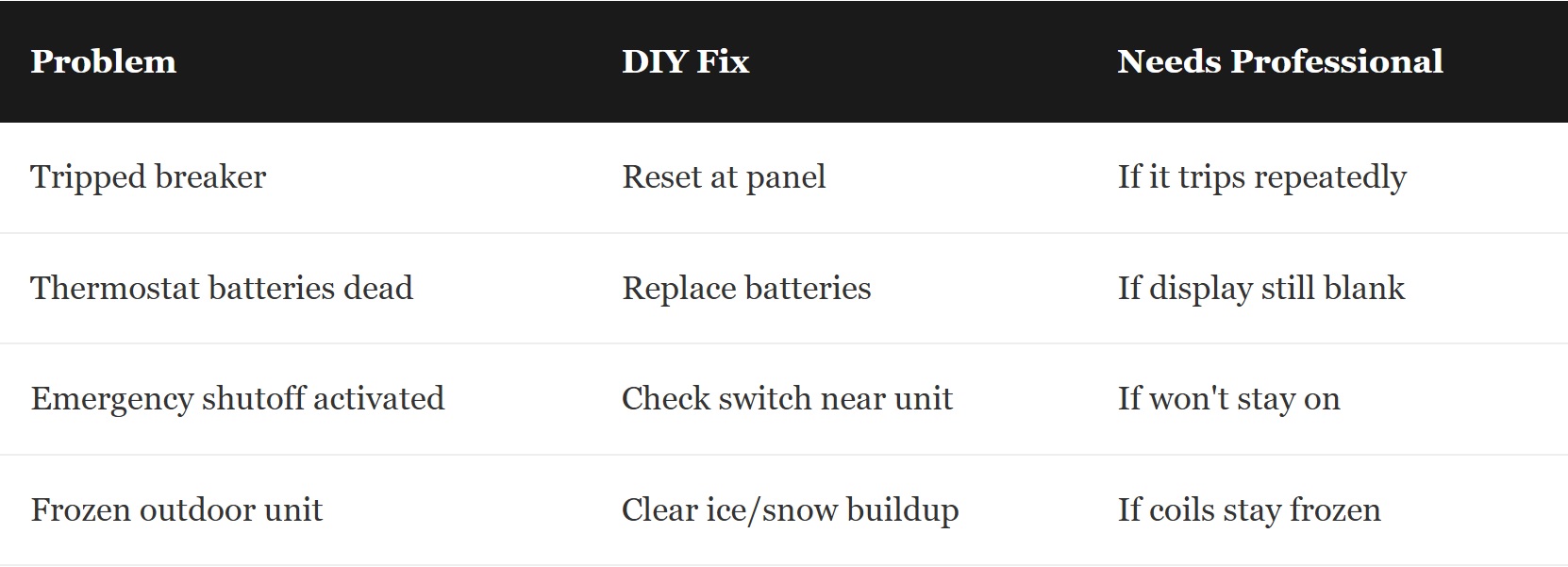
The thermostat issue gets overlooked constantly. People assume because it's displaying something, it's working correctly. Not always true. Try switching from "heat" to "cool" and back—sometimes that simple reset does the trick.
.jpg)
Got a new heat pump not blowing hot air? That's frustrating, especially when you just dropped several thousand dollars on installation. Here's what might be happening—and this circles back to something I mentioned earlier about the reversing valve.
The Carrier reversing valve energized in heat or cool specification matters because different manufacturers wire these valves differently. Carrier energizes theirs in cooling mode, meaning if there's an electrical issue, the valve defaults to heating. Sounds good until you realize a malfunctioning valve might be stuck between modes, giving you lukewarm air regardless of your thermostat setting.
A proper heat pump troubleshooting chart would tell you to check:
What are the most common problems with heat pumps? Refrigerant leaks, frozen coils, faulty thermostats, and reversing valve failures top the list. Dirty filters cause probably 60% of service calls though—embarrassingly preventable stuff.
What is the $5000 rule for HVAC? Multiply repair cost by unit age. Over $5000? Replace instead of repair.
What is the average life expectancy of a heat pump? Generally 10-15 years, though New York's harsh winters tend to shorten that window.
What is the 20 degree rule for heat pumps? Your heat pump can typically raise indoor temperature about 20 degrees above outdoor temps without auxiliary heat assistance.
Your heat pump problems usually have solutions that don't require emptying your savings account. Sometimes it's a $3 filter. Sometimes it's a $3,000 compressor. Knowing the difference? That's where the real savings happen.


